墨白
墨白 After the age of 50, various “floppy” problems on the face begin to appear simultaneously: the Apple Zone sags, the Nasolabial Fold Correction becomes more pronounced, the jawline becomes less defined, and the neck loses its firmness… At this point, many people start to hesitate: since both Thermage and HIFU are claimed to have anti-aging and lifting effects, which one should one choose at the age of 50? This article provides you with a direct and well-founded answer.
First, understand the depth of their respective functions.
The most fundamental difference between Thermage and HIFU lies in the type of energy they use and the depth of their effects; these factors determine the types of problems each of them is better suited to address.
| Project | Thermage | HIFU |
|---|---|---|
| Types of energy | Monopolar Radio Frequency (RF) | High-intensity focused ultrasound (HIFU) |
| Depth of effect | 1.1 to 4.3 mm (from the dermis to the superficial fascia) | 3.0 to 4.5 mm (reaching directly the SMAS fascia layer) |
| Main mechanisms | The radiofrequency thermal effect stimulates the contraction and regeneration of collagen. | Targeting the ultrasonic heat coagulation point to directly lift the deep fascia |
| Most adept at solving problems | Improves superficial sagging, fine lines, and overall skin quality. | Deep fascia sagging and overall facial contour lifting |
| Duration | 1 to 2 years | 1 to 1.5 years |
| Pain | Moderate to significant effect (local anesthesia required) | Mild to moderate (adjustable) |
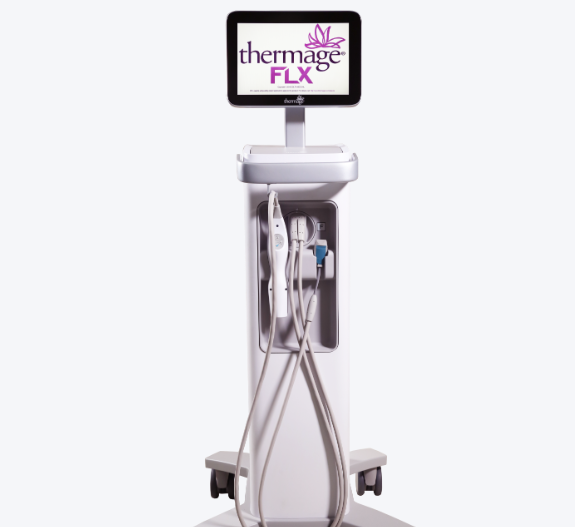
The typical condition of skin at the age of 50
Understanding the aging characteristics of skin at the age of 50 is essential for making informed choices. Around the age of 50, the face typically undergoes the following changes:
- Significant loss of Collagen: The thickness of the skin decreases, its elasticity declines noticeably, and fine lines become more permanent.
- Deep fascial relaxation: As the supporting strength of the SMAS fascial layer decreases, the Apple Zone and the fat pads on both cheeks begin to descend as a whole.
- Bone resorption: Mild resorption of the zygomatic bone, orbital bone, and maxilla, resulting in weakened support for the facial skeleton.
- Redistribution of fat: Fat loss in the upper face and accumulation in the lower face result in a “heavier lower face and a hollower upper face”.
This indicates that the aging issues associated with the age of 50 are no longer merely about “superficial wrinkles,” but rather more profound problems such as weakened fascia and loss of tissue volume.
Which one is more suitable for someone at 50 years old?
Based on the main symptoms of skin issues, the following recommendations are provided:
If your main concern when considering using HIFU is…
- The Apple Zone has visibly sagged, causing the overall contour of the face to “collapse”.
- The jawline is blurred, and there is a slight Double Chin.
- The Nasolabial Fold Correction and Marionette Line Correction have become significantly more pronounced due to the sagging of soft tissues.
- What’s needed is a sense of “lifting and pulling upwards,” not just “tightening.”
Choose Thermage if your main concern is:
- The overall relaxation is not severe; the main issues are the deterioration of skin texture and enlarged Pores.
- There are noticeable fine lines around the eyes, and the eyelids have slightly relaxed.
- Horizontal lines on the neck or mild neck sagging
- If you have undergone HIFU treatment, you may want to “lock in” the results and maintain firm skin.
When these two elements are combined, if you wish to:
By simultaneously addressing both deep sagging and superficial skin issues, one can first use HIFU to Lifting the underlying fascia, and then undergo Thermage treatment after at least one month to tighten the epidermis. These two methods work together in a complementary manner, resulting in a more comprehensive anti-aging effect.
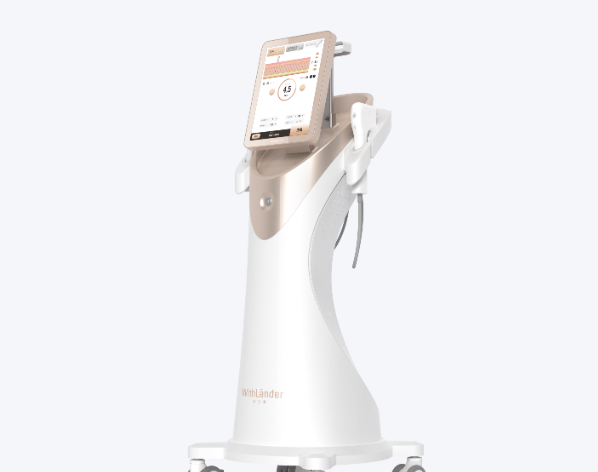
Reference for expenses in South Korea in 2026
The following are the approximate fee ranges for major medical aesthetics clinics in South Korea:
| Project | Cost range | Explanation |
|---|---|---|
| HIFU (for the entire face) | Starting from 12,000 yuan | 600 to 800 strands are suitable for mild to moderate sagging. |
| HIFU (for the entire face) | Starting from 18,000 yuan | 1,000 to 1,200 strands are suitable for those over 50 years old who experience significant sagging. |
| Thermage (Full-Face Basic Treatment) | Starting from 18,000 yuan | 900 to 1200 strands |
| Thermage (full-face premium treatment) | Starting from 30,000 yuan | 1,500 strands or more, including areas around the eyes for enhanced results. |
| Combination of HIFU and Thermage | Starting from 28,000 yuan | Combination packages offer the most comprehensive results. |
Many large-scale Dermatology clinics and plastic surgery centers in South Korea offer package discounts for foreign patients seeking cosmetic treatments. It is recommended to consult and inquire about prices in advance through official channels, and to confirm the number of treatments, the brands of equipment used, and the qualifications of the doctors.
Precautions after HIFU treatment
- Avoid high-temperature environments (such as saunas and steam baths) and strenuous exercise within one week after the procedure.
- It is normal to experience mild swelling and tenderness after the procedure; these symptoms usually subside within 3 to 7 days.
- The peak effect is usually seen 3 to 6 months after the procedure; it is recommended to take photos as a record.
- After the procedure, it is important to enhance moisturization and sun protection to extend the duration of the effects.
- If you have metal implants, such as bone plates, or facial fillers, be sure to inform your doctor before the procedure.
How long can the effects of HIFU last for a 50-year-old person?
The lifting effect of HIFU generally lasts for 1 to 1.5 years. However, for people over 50 years old, due to the faster rate of aging, this effect may last only around 1 year. Some individuals may start noticing a decline in the results as early as 6 to 9 months after the procedure. It is recommended to undergo a maintenance treatment once a year and, under the guidance of a doctor, combine it with other anti-aging treatments such as Filler injections, PRP (Platelet-Rich Plasma), or microneedling for comprehensive care.
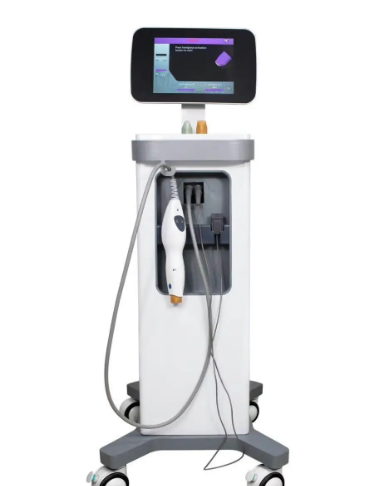
Real Case Study: The Decision-Making Process of a 50-Year-Old Person
Taking a 50-year-old patient as an example, her main issues were sagging Apple Zone, unclear jawline, deep Nasolabial Fold Correction, as well as fine lines around the eyes and rough skin texture. Based on the above analysis, the doctor recommended the following treatment plan: first, use HIFU (1000 treatments across the entire face, with special emphasis on the mid-to-lower facial area) to address the deeper lifting concerns; two months later, proceed with Thermage (covering the entire face, including the eye area) to further tighten the skin and reduce fine lines around the eyes. The interval between these two treatments was appropriate, and the combined effect was significantly better than performing either procedure alone.
Summary: A Guide to Anti-aging Choices for People in Their 50s
The core issue of facial aging in people aged 50 is the relaxation of the deep fascia. Since the HIFU targets the SMAS layer, it is particularly effective at lifting sagging skin, making it the top recommendation for most 50-year-olds seeking cosmetic treatments. If there are also obvious problems with the superficial skin, Thermage can be performed after the HIFU procedure to achieve comprehensive anti-aging effects from deep to surface. When making a choice, it is essential to consider one’s individual skin conditions; it is recommended to have a pre-treatment consultation to allow a doctor to develop a personalized treatment plan.