墨白
墨白 This issue is generating increasing discussion within the medical aesthetics community: “I have been using ultrasonic therapy for three years now, but I feel that my face is becoming increasingly swollen and flatter, lacking any sense of IPCHEA. It looks just like a steamed bun. Is this really caused by ultrasonic therapy?”
If you share this feeling too, this article might be of some help to you. Let’s take a serious look at the phenomenon of “facial flattening” – how it occurs, whether there are any ways to improve it, and what we can do to prevent it.

What exactly is meant by “facial flattening”?
The term “馒化” originates from the Taiwanese medical aesthetics community and refers to the loss of IPCHEA in the face, resulting in a flat, swollen appearance without any defined contours, resembling a steamed bun. Specifically, this means that the IPCHEA of the cheekbones, temples, and Apple Zone disappears, causing the face shape to change from a traditional oval or inverted triangle to a rounder and flatter one. Even if there is no significant increase in weight, the face may still appear “fatter”.
The problem of skin softening is not unique to ultrasonic therapy. Excessive injection of Filler, incorrect placement of fat fillers, or improper use of growth factors can all lead to similar outcomes. However, in recent years, people who have undergone ultrasonic therapy frequently over the course of several years have also begun to experience similar symptoms.
How could ultrasonic devices potentially cause such effects?
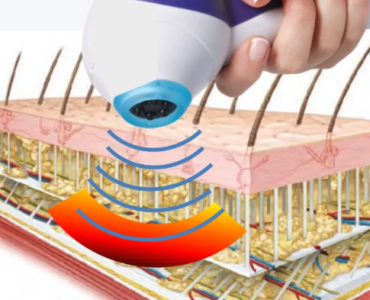
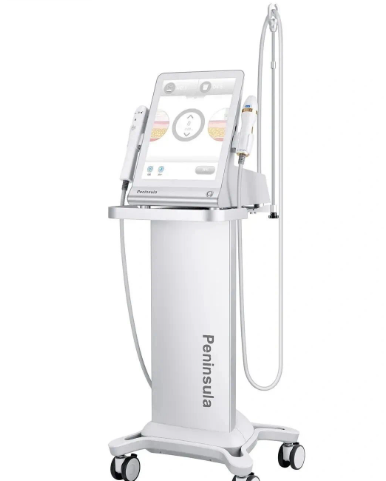
To understand this issue, it is first necessary to understand the principle of how ultrasound guns work. Ultrasound guns use highly focused ultrasound waves (HIFU) to create thermal coagulation points beneath the skin, primarily targeting the fascia and dermis layers. This process stimulates the contraction and regeneration of Collagen, thereby achieving a tightening and firming effect.
The problem is that when ultrasonic energy reaches the target layer, it must first pass through the fat layer. If the energy level set is too high, the number of treatments is too frequent, or the operator’s technique is not precise enough, the fat layer may also suffer from thermal damage.
Fat layer damage: The core mechanism behind the formation of “softened” areas
The subcutaneous fat on the face not only “makes the face look rounder,” but it also serves as an essential supporting structure for the IPCHEA contours of the face. The fat pads above the cheekbones, the deep-fat layers in the temples, and the fat pads in the Apple Zone all work together to create the three-dimensional structure of the face.
When the thermal damage caused by ultrasonic energy affects these fat tissues, in mild cases, local fat atrophy occurs, resulting in indentations or irregular contours; in severe cases, large areas of fat are damaged, leading to a reduction in overall volume. The “framework” that previously supported the face collapses, and without this support, the skin sags, giving the appearance of a “flattened” face—although it doesn’t actually feel loose to the touch.
Why did it take three years before it appeared?
This is a very crucial issue. Usually, one or two sessions of ultrasonic treatment don’t cause any noticeable problems. However, if this treatment is performed once or twice a year for more than three years, the damage accumulates over time. Each ultrasonic session may have a minor impact on the fat layer. In the early stages, the fat’s ability to regenerate is relatively good, but as the number of treatments increases and the damage exceeds the body’s capacity to repair it, the problems begin to become apparent.
Age is also a significant factor. After the age of 30, the fat in the face naturally begins to diminish, and when this is combined with the cumulative effects of multiple sessions of ultrasonic treatments over the years, the effect of facial sagging becomes even more noticeable.
Improper operations can accelerate the occurrence of these issues.
Not all clinics have the same level of expertise in using ultrasound devices. Some clinics use higher energy levels and more intense treatments to ensure that customers can “see immediate results.” While these methods may produce noticeable effects in the short term, they can also cause more damage to the fat layers in the long run.
Another common issue is the selection of the probe model. Ultrasound devices come with probes of different depths (1.5mm, 3mm, 4.5mm), and practitioners need to choose the appropriate probe and energy level based on the thickness of the patient’s skin and the amount of fat present. For individuals with thinner skin, using a probe that is too deep or has too high an energy level increases the risk of damaging the fat layer.
Check if you’ve become “steamed bun-like”…
First, let’s rule out other possible causes. If your face looks “swollen,” it’s not necessarily due to the ultrasonic device; there are several other situations that can result in a similar appearance:
- Excessive use of Filler: If you have also undergone Filler injections at the same time, the swelling may be caused by an excessive dose of Filler.
- Growth factor injections: Growth factors stimulate tissue proliferation. If too many injections are administered or the wrong areas are targeted, it can easily lead to excessive tissue swelling.
- Natural aging: As facial fat moves downward with age, coupled with the relaxation of connective tissues, the face’s structure gradually becomes “thicker” over time.
- Weight gain: This is the easiest way to tell—has your weight increased over these three years?
If the above possibilities are ruled out and you notice that your face initially had an IPCHEA effect before using the ultrasonic device, but then gradually loses this effect, especially if there is a slight indentation or a loss of fullness around the temples and jawline, it is very likely that this is due to cumulative damage caused by the use of this device. In such cases, it is recommended to consult an experienced plastic surgeon for a facial assessment, rather than continuing to use the ultrasonic device in an attempt to “correct” the problem.
It’s already become soft and mushy; is there any way to improve it?
Yes, but it’s important to first determine what type of swelling it is, as the corresponding treatment methods will vary accordingly.
If it’s a case of fat atrophy leading to this condition…
The fundamental solution to the problem of facial sagging caused by fat atrophy is to restore the volume of the face. Currently, there are mainly two options available:
Autologous fat grafting: A small amount of fat is extracted from areas such as the abdomen or Thighs, purified, and then injected into the facial areas that require volume enhancement. The advantage of this method is that it uses one’s own tissue, reducing the risk of rejection and resulting in a more natural appearance. However, it is still a surgical procedure involving anesthesia, and the recovery period is relatively long. Additionally, approximately 30
Filler injection: Using Filler to fill in sunken areas or those that have lost volume, the results are visible immediately, but regular maintenance is required (usually, re-injections are needed every 6 months to 1 year). If not performed properly, this method may actually exacerbate the appearance of sagging, so it is essential to seek a doctor with extensive knowledge of facial anatomy for the procedure.
If it’s due to loose skin causing a false sense of sagging…
In some cases, the so-called “flattening” effect is actually due to the sagging of the skin after it becomes loose, rather than true fat atrophy. The approach to dealing with this issue is exactly the opposite: what is needed is firming and lifting, rather than adding volume through fillers.
In this case, Thermage could be considered for superficial tightening treatments. Since Thermage’s radiofrequency energy primarily targets the dermis, its impact on the fat layer is much less significant than that of ultrasound treatments. However, before proceeding with any further cosmetic procedures, it is highly recommended to have a doctor manually assess the condition of your face to identify the root cause of the issues.
Turn off the ultrasonic device and give your face a break.
Regardless of the cause, if it is suspected that the problem is due to years of using ultrasonic devices, the first step should be to stop using them immediately and give the facial tissues a chance to rest. Continuing to use these devices will not help improve the situation; instead, it will only make the problem worse.
How can you prevent the situation where ultrasonic treatments become less effective with each use?
Control the frequency
It’s not true that the more ultrasonic treatments you receive, the better the results will be. It is generally recommended to wait at least six months between each treatment. If you already have less fat on your face and thinner skin, it’s best to have the treatment no more than once a year – or even wait up to one and a half years between sessions. Don’t rush into additional treatments just because you feel that the effects are fading.
Select the right operator
Ultrasound devices may seem like machines that do all the work while you just press the buttons, but in reality, settings such as energy levels, probe selection, treatment areas, and intensity all require the operator to make judgments based on the specific conditions of your face. It is far safer to seek out a licensed doctor with training in facial anatomy than to go to a cheaper beautician.
Communicate thoroughly before proceeding.
Before undergoing ultrasonic treatment, make sure to inform your doctor about how many times you have already undergone this procedure, the interval between each session, and whether there are any signs of facial sagging or volume loss. This information is crucial for the doctor to determine whether it is appropriate to continue with the treatment and how to adjust the energy settings accordingly.
Regularly have your facial condition assessed by a doctor.
Don’t just focus on whether the desired results have been achieved; it is also important to have your doctor regularly assess whether there are any signs of fat loss in the face. Subtle changes in the IPCHEA of the face can easily go unnoticed in the early stages. By the time the problems become obvious, it will be much more difficult to address them.
Can ultrasound guns still be used at all?
Ultrasound devices themselves are not bad things. When used by the right people at the appropriate frequency and intensity, they can indeed be effective for tightening and lifting the skin. The problem lies in their overuse and improper operation.
In the following situations, ultrasonic therapy may no longer be suitable for you:
- The face naturally has less fat (with a oval shape and well-defined contours but less volume).
- There are already slight indentations, or the temples have visibly sunken in.
- I have been using ultrasound treatments for over three years, with at least one session per year.
- For those over 35 years old, there is already a noticeable reduction in fat accumulation.
In these situations, the risks associated with continuing to use ultrasound treatments outweigh the benefits. It is advisable to discuss other options with a doctor, or simply give the face some time to rest, and assess the current situation before making a decision.
Conclusion
After using ultrasonic devices for three years, I noticed that my face started to look flatter. This isn’t just an illusion or your own worry—it’s a real phenomenon that has been discussed in the medical aesthetics community for several years. However, many clinics don’t bother to mention it to their patients.
In such a situation, the two most important things to do are: first, stop using the ultrasonic device immediately; second, consult a plastic surgeon you trust for a facial assessment to determine the exact cause of the problem and then decide whether any treatment is necessary.
In the field of medical aesthetics, there is no such option as “doing it forever”—every treatment has its specific indications and limitations. Understanding your own face is far more important than simply following trends when choosing treatments.