墨白
墨白 If you want to undergo HIFU treatment in South Korea, simply choosing a clinic can be a daunting task. Liol Dermatology is a dermatology clinic that has attracted considerable attention from Taiwanese tourists in Seoul in recent years. It specializes in precise, layered HIFU treatments, and the 300-shot full-face treatment is currently available at a starting price of 1.32 million South Korean won. This article explains the principles behind HIFU treatment, the reasons why Liol is a good choice, and several things you should know before going to South Korea for this treatment.
What exactly is Hafu ultrasound technology?
The English term for HIFU is HIFU (High-Intensity Focused Ultrasound), which is also sometimes referred to as “ultrasonic knife” or “HIFU” in Chinese. The principle behind this technology is to deliver high-intensity focused ultrasound energy deep into the skin, without damaging the epidermis. This process creates thermal coagulation points directly in the SMAS layer and the deeper layers of the dermis, stimulating the contraction and regeneration of Collagen. As a result, loose skin contours are gradually tightened and redefined.
Their mechanisms of action are somewhat different from those of Thermage (radiofrequency): Thermage primarily heats the dermis and fascia, making it suitable for improving skin quality and reducing fine lines; whereas HIFU ultrasound can penetrate deeper and is more effective at achieving physical contour Lifting. Both methods have their own advantages, and many people choose to combine them based on their specific needs.
Is 300 enough? How can I tell how many sessions I have had?
The number of treatments represents the “number of sessions” in which ultrasonic energy is applied. More treatments are not necessarily better; what matters is the depth and specific area targeted. For a full-face HIFU treatment, the typical number of sessions ranges from 200 to 600, depending on the shape of the face and the degree of skin laxity.
The 300-fiber package is a basic full-face treatment option, suitable for those with mild to moderate skin laxity, first-time users, or as part of regular maintenance. If the face area is larger or the degree of laxity is more pronounced, the doctor may recommend additional fibers. Liol’s packages starting from 1.32 million Korean won are based on a 300-fiber configuration, but the actual cost will be determined according to the individualized treatment plan developed after a face consultation.
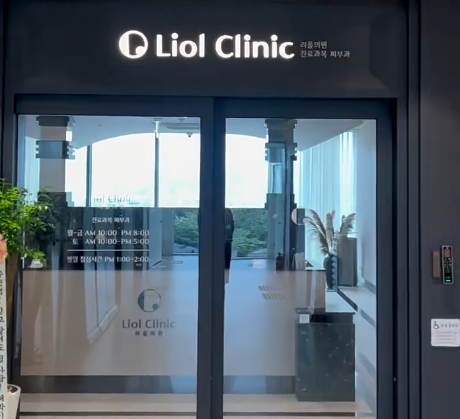
The features of Liol Dermatology
Liol Dermatology is renowned in Seoul for its refined Lifting treatment programs. Instead of adopting the mass-production model typical of large chains, it places greater emphasis on pre-treatment analysis and personalized treatment plans. Here are several notable aspects:
Firstly, the selection of probe depths is precise and tailored to individual patients. The effectiveness of Hafy ultrasound treatments largely depends on whether the doctor accurately determines the thickness and degree of skin laxity in each patient, and then selects the appropriate probe depth accordingly (common options include 1.5mm, 3.0mm, and 4.5mm). Doctors at Liol conduct a detailed skin assessment before the procedure, rather than simply following a standard protocol.
Secondly, communication between China and Korea. When there is a language barrier, misunderstandings can easily arise during medical beauty consultations. Liol provides Chinese-language explanatory materials, and some appointment schedules also come with Chinese translations to facilitate communication, making it particularly convenient for Taiwanese visitors.
Thirdly, clear post-treatment instructions are provided. After the procedure, the face may experience mild redness or localized swelling, which usually subsides within 24 hours. Liol will provide detailed guidelines on post-treatment care, including tips for keeping the skin hydrated, protecting it from the sun, and avoiding certain activities in the immediate aftermath.

How can one maintain the effects of Hafei ultrasound treatments?
The effects generally peak 1 to 3 months after the treatment. Since the regeneration of Collagen takes time, it is unrealistic to expect significant changes immediately. The duration of these effects ranges from 9 to 18 months, varying from person to person. Lifestyle habits, sun protection practices, and the quality of sleep all affect the longevity of these results.
Most doctors recommend a maintenance treatment once a year. When combined with other anti-aging treatments (such as Filler injections or Thermage for skin rejuvenation), the results are usually more comprehensive.
What should be considered before getting the treatment?
There are a few things that it’s best to clarify before making a reservation:
It is not recommended to receive this treatment during pregnancy or the pre-pregnancy period. If you have facial implants (such as Filler that has been recently administered), you should inform your doctor, as in some cases, a certain interval should be allowed before proceeding. Patients with contraindications to ultrasound (such as those with abnormal blood clotting functions) should also inform their doctor in advance.
In addition, after the Hafei ultrasonic treatment, the skin becomes more sensitive. It is recommended to avoid high-temperature environments (such as hot baths or saunas) on the same day, and to take proper measures to keep the skin hydrated and protected from the sun. If you have plans to travel to Korea, it is best to schedule the Hafei ultrasonic treatment at the beginning of your trip, so that your skin has enough time to recover.
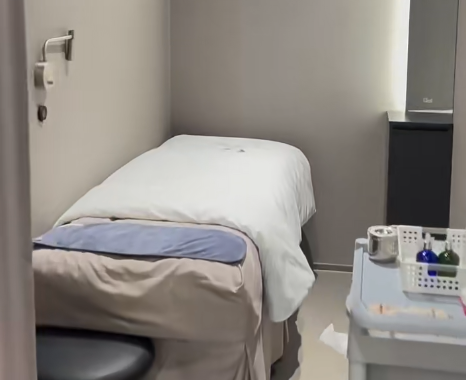
For reference only
At Liol Dermatology, the full-face HIFU treatment with 300 treatments currently starts from 1.32 million Korean won. The actual cost may vary depending on the treatment plan determined during the in-person consultation, whether additional treatments are required, and any current discounts available. It is recommended to inquire about the prices in advance through official channels to avoid discovering that the costs exceed your budget at the time of the procedure.
The rate conversions provided are for reference only. The exchange rate for the Korean won changes daily, so it is recommended to check the current rate before making a reservation.
How do I make a reservation?
You can make arrangements in advance through specialized platforms for medical beauty treatments in Korea. Some of these platforms offer Chinese-speaking customer service and on-site translation assistance. If you contact them directly, it is recommended to confirm the details of the treatment and the costs in writing, either in English or Korean, to avoid misunderstandings that may arise from verbal communication.
After arriving in Korea, it is recommended to schedule the consultation early so that the doctor has sufficient time to conduct a thorough pre-operative assessment, rather than trying to complete the procedure during a short break in your itinerary. The pre-operative preparations and post-operative follow-up for HIFU treatment require some time.