墨白
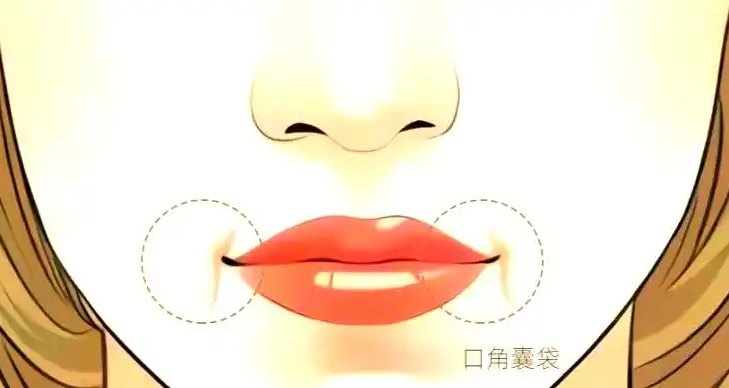
墨白 Dear readers, have you ever looked in the mirror and wondered why, despite maintaining the same weight and taking good care of your skin, small pouches have begun to appear around the corners of your mouth, giving you a tired or even aged appearance? These are the troublesome perioral pouches that affect many people. Don’t worry – today we will delve into how South Korea addresses this issue and explore how the medical aesthetics industry there uses sophisticated, layered treatment approaches to help people regain their youthful, firm contours.
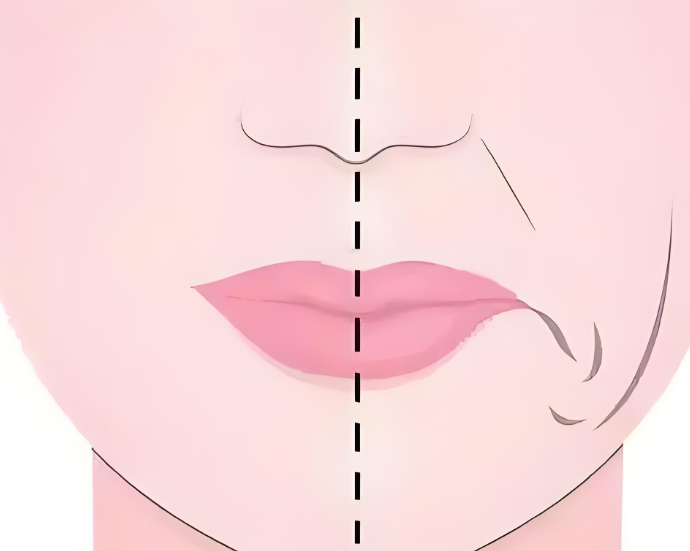
I. Analysis of the causes of oral pouch formation: It’s not just about skin laxity
To effectively address this issue, it is first necessary to understand its causes. Dermatology experts in South Korea point out that the formation of these pouches at the corners of the mouth is not simply a result of structural aging, but rather a comprehensive manifestation of multi-layered degeneration. There are primarily four factors involved: First, fat accumulation—especially in individuals who naturally have thicker fat layers at the corners of their mouths, making it easy for small pouches to form even when not overweight. Second, the relaxation of skin and fascia; as people age, the loss of Collagen and the breakdown of elastic fibers lead to a decrease in support structure. Third, bone resorption; after the age of 30, the mandible gradually shrinks, weakening the skeletal support and causing soft tissues to sag more easily. Fourth, mixed-type aging, which occurs when issues affect fat, skin, ligaments, and bones simultaneously. This is also the most common and difficult type to treat.
Research in South Korea has also found that the facial bone structure of Asians tends to result in more pronounced nasolabial folds compared to Europeans. Therefore, simple fillers or facelifts may not be sufficient to achieve significant improvements; a detailed assessment of an individual’s specific signs of aging is necessary. Understanding whether one’s nasolabial folds are caused by fat accumulation, bone resorption, skin and fascia relaxation, or a combination of these factors is the first step in selecting the appropriate treatment approach.
II. South Korea’s non-surgical solutions: the intelligent combination of phototherapy and injections
For early-stage or mild to moderate cases of oral pouches, South Korea’s medical aesthetics industry primarily recommends non-invasive or minimally invasive treatments. These methods feature short recovery periods and high safety levels, making them particularly suitable for today’s busy urban population.
Optoelectronic Lifting treatments are fundamental options. For example, Thermage uses radiofrequency energy to stimulate the contraction and proliferation of collagen in the dermis, thereby improving mild skin laxity; Ultherapy, on the other hand, targets the deeper SMAS fascia layer, providing immediate Lifting effects. Recently, gold radiofrequency microneedling has also become popular in South Korea. These treatments use 49 microneedles to deliver radiofrequency energy, stimulating collagen regeneration and achieving up to 65
Injection-based treatments are more targeted. For cases involving fat accumulation, South Korean doctors use small-scale, superficial fat-dissolving injections to carefully reduce excess fat. In cases where bone resorption leads to insufficient support, structural fillers are applied at the lower jawline to strengthen the underlying framework. Additionally, Botulinum toxin type A can relax overactive muscles that cause the corners of the mouth to sink, thereby reducing the downward pulling force. Filler treatments, such as those using Filler or Collagen, can provide support in the sunken areas beneath the fat pockets, visually reducing the appearance of sagging. South Korea has also introduced collagen-stimulating agents like the AestheFill DongAn Center Introduction injection, which remain effective for 18 to 24 months and do not require any special recovery period after the procedure.
III. South Korea’s surgical-grade Lifting solutions: from thread lifting to comprehensive Lifting treatments
When the problem of sagging skin is relatively severe and non-surgical methods are limited in their effectiveness, South Korean doctors will recommend surgical options. Although these treatments are more invasive, they are highly effective and long-lasting, making them suitable for those with moderate to severe skin laxity who seek cosmetic improvements.
Lifting using thread implants is a representative example of minimally invasive surgery. By inserting absorbable protein threads, the procedure physically lifts and tightens loose tissues while also stimulating collagen regeneration. The recovery period for this method is approximately 3 to 5 days, and the results can last for 1 to 1.5 years, making it suitable for individuals with mild sagging. Fat redistribution surgery, on the other hand, is designed for cases where tissue volume is lacking. It involves redistributing or transplanting fat to provide more natural support for body contours, and the effects of this treatment can last for over 5 years.
For the most severe cases of sagging, SMAS facelift surgery – also commonly referred to as threadlift – represents the ultimate solution. This procedure involves making discreet incisions at the Hairline Correction or in front of the ears, then lifting the skin and the underlying SMAS fascia layer towards the back and upwards, while removing any excess skin. This effectively addresses the problem of severe sagging that can cause pouches around the mouth. Research conducted by the Seoul National University Hospital has shown that patients who undergo this multi-layered Lifting procedure have a high satisfaction rate of 92
IV. South Korea’s philosophy of hierarchical treatment: Personalized combinations are the key
What is truly worth learning from South Korea’s medical aesthetics industry is not a single specific technique, but rather a treatment philosophy based on multi-layered approaches. South Korean doctors are well aware that the nasolabial folds represent a complex manifestation of multi-level aging; therefore, there is virtually no magic formula that can solve the problem with just one injection. Instead, customized combination treatments must be designed according to each individual’s unique anatomical structure.
For the fat-protruding type (commonly seen in younger individuals), the core treatment approach involves fat reduction combined with mild support: first, reduce the volume of fat through lipolysis, then use Thermage or Ulthera for Lifting, and finally apply a small amount of Filler to lift and support the areas around the mouth. For the bone-absorbing type, the focus is on restoring structural support through structural filling at the mandibular margin and strengthening ligamentous areas, complemented by mild tightening using ultrasound or radiofrequency. In the case of skin and fascia relaxation (common in older adults), the treatment requires both tightening and Collagen regeneration, combining Thermage FLX for deep-layer tightening, ultrasound Lifting, and Juvelook Collagen to stimulate the body’s own Collagen production.
The most common mixed types require comprehensive integrated treatments that address multiple issues simultaneously, including structural problems, fat accumulation, skin conditions, and ligament-related issues. The classic treatment combination offered by Dayone Dermatology in South Korea includes structural filling at the jawline, Thermage or ultrasound Lifting, Juvelook collagen injections, and lipolysis needles – all working together to achieve optimal results. This refined approach to treatment ensures that the outcomes are natural and long-lasting.

V. Booking Methods and Daily Maintenance Tips at BeautsGO
After learning about so many professional solutions, you might be wondering how to start your own journey towards improvement. Through the BeautsGO platform, you can easily schedule professional consultations with top medical beauty institutions in South Korea. Simply download the BeautsGO app, register an account, access the South Korea medical beauty section, and select the treatment you are interested in. The system will then recommend suitable clinics and doctors based on your needs. The platform offers online consultations, case studies, transparent price comparisons, and can also assist with arranging translations and local support, ensuring that your medical beauty experience in South Korea goes smoothly and without any obstacles.
In addition to medical beauty treatments, daily skincare is also essential. Dermatology experts in South Korea recommend the following: adhere to sun protection and antioxidant practices to prevent Collagen from being damaged by ultraviolet rays; maintain a stable weight to avoid rapid weight loss, which can lead to a loss of facial fat support; perform appropriate facial massages and muscle relaxation exercises to improve blood circulation and muscle balance; and ensure a healthy lifestyle with sufficient sleep, as these are fundamental for delaying the signs of aging. Remember, improving the appearance of nasolabial folds requires patience and consistency. Only by combining professional treatments with good habits can you achieve the best results.
From analyzing the causes to considering different treatment options, we have thoroughly explored how South Korea addresses the issue of nasolabial folds. Whether it’s photorejuvenation, minimally invasive injections, or surgical Lifting procedures, South Korean cosmetic medicine emphasizes a tailored and precise approach. The key lies in finding an experienced doctor who understands anatomy to conduct a comprehensive assessment and develop a personalized, multi-layered treatment plan. Rather than blindly pursuing a single treatment method, it’s better to understand your own type of aging and choose the most suitable combination of treatments. We hope this guide will help you address the problem of nasolabial folds more wisely and regain a confident and attractive smile. Remember, investing in Beauty requires wisdom and patience, and understanding how South Korea tackles this issue is the first step towards achieving a younger-looking appearance.