墨白
墨白 After undergoing the Ulthrea treatment, the face shows no swelling or pain, and it’s also impossible to detect any visible results. Is this simply a normal individual variation, or does it mean that the treatment is completely ineffective? This is a question that many people who try HIFU for the first time often ask. In this article, we will start by explaining the mechanism of how HIFU works, and then delve into whether the absence of swelling and pain actually indicates that the treatment is ineffective, as well as how to determine whether your own treatment has been successful.
First, understand the working principle of the Ulthrea.
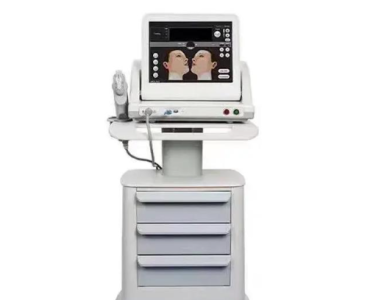
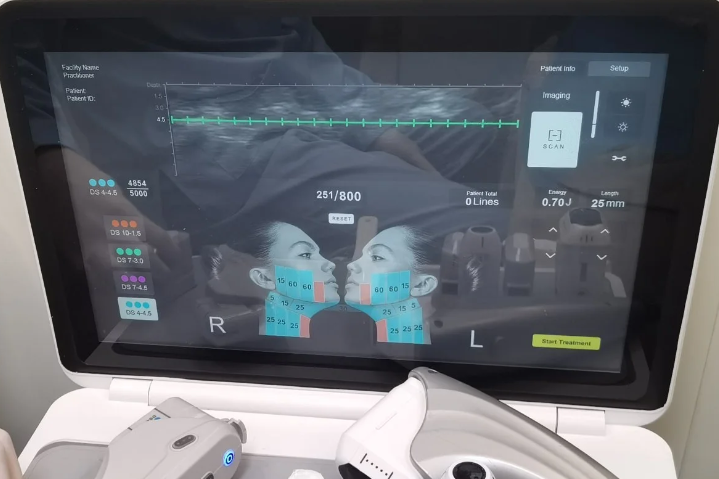
The Ulthrea (also known as Ulthera) is a non-invasive skin tightening device developed by the American company Merz Aesthetics. By utilizing HIFU technology, it precisely delivers energy to the deeper layers of the skin (at 1.5mm, 3mm, or 4.5mm depths). Without damaging the epidermis, this process instantly raises the temperature of the targeted tissues to 65-70°C, stimulating the regeneration of Collagen and thereby achieving the effects of skin tightening and lifting.
Precisely because it is a “non-invasive” treatment method, the HIFU does not require cutting through the skin. Therefore, in the vast majority of cases, patients will not experience obvious scars or extensive swelling after the procedure – and this is completely normal. However, “no swelling, no pain” and “no effect at all” are two completely different concepts, and they must not be confused.
Is it normal not to experience swelling or pain after undergoing HIFU?
To conclude: It is completely normal not to experience swelling or pain after undergoing the advanced version of the Ulthrea treatment. The HIFU procedure is a non-invasive treatment designed to heat deep tissues without affecting the epidermis as much as possible. Common post-treatment reactions include mild redness that subsides within a few hours, slight local swelling that disappears within 1-3 days, and some people experiencing mild tightness or numbness, which are normal neurological responses. In a few areas (such as the temples or jawline), the skin may be more sensitive, resulting in mild discomfort.
If you don’t feel anything after the procedure, it doesn’t necessarily mean that it’s “ineffective”; rather, it might be because your skin condition and nerve sensitivity are naturally lower. Everyone’s constitution and pain tolerance vary greatly. Some people may experience discomfort for several days after the treatment, while others may feel nothing at all – both of these are completely normal.
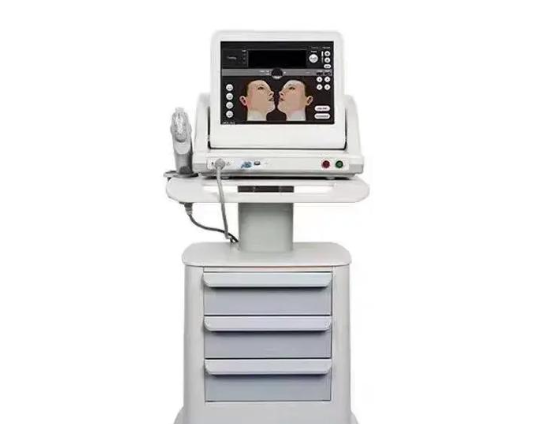
No effect after undergoing HIFU? These 4 situations are the real reasons for no results.
Scenario 1: Using counterfeit or imitation devices
There are a large number of devices on the market that claim to be the “Ulthrea” but are actually imitations. The genuine Ulthera devices come with an official serial number from Merz, and clinics should provide certification documents for the equipment. If a clinic is unable to provide such certification, or if the price is significantly lower than the market rate (the cost of a full-face treatment with the genuine Ulthrea in South Korea usually starts around 10 million won), it is necessary to be cautious about the authenticity of the device.
Scenario 2: The practitioner has set their energy level too low.
Some clinics reduce the energy level of their equipment below its effective threshold in order to ensure that customers experience no pain or discomfort. While this may result in greater post-treatment comfort, it also leads to virtually zero therapeutic effect. A proper treatment plan should adjust the energy level according to the patient’s skin condition, rather than simply aiming for a completely pain-free experience.
Scenario 3: Insufficient number of injection points
The effectiveness of the Ulthrea is closely related to the density of treatment spots. A complete full-face treatment usually requires 600 to 900 treatment spots. If a clinic reduces the number of treatment spots (for example, only applying 200 to 300 spots), the results will naturally be less significant. It is recommended to inquire in advance and confirm the exact number of treatment spots, and also request a record of the treatment details.
Case 4: Incompatibility with indications
The ideal candidates for HIFU are those aged 30 to 50 whose skin has begun to relax but has not yet sagged severely. If the skin is very young (with sufficient Collagen and thus not prone to relaxation), the effects of HIFU will naturally be less noticeable; on the other hand, if the skin’s sagging is already very pronounced, HIFU may not be effective, and other treatment options should be considered.
When will the effects of the Ulthrea become apparent?
This is a crucial point that many people overlook: HIFU is not a treatment that produces immediate results. The mechanism of action of HIFU is to stimulate the regeneration of Collagen, but the reorganization of Collagen requires time.
- 1–2 weeks after the procedure: The skin may feel slightly tight, and some individuals may notice an immediate slight lifting effect.
- 1–3 months after the procedure: Collagen begins to regenerate, and the effects of skin tightening and lifting gradually become apparent.
- 3 to 6 months after the procedure: The results reach their optimal state, with more defined contours and tighter skin.
- Effect durability: The results usually last for 1 to 1.5 years, after which it can be decided whether to undergo another treatment depending on the condition of the skin.
Therefore, claiming that “there is no effect” immediately after the procedure is too hasty of a judgment. It is recommended to compare before-and-after photos after 3 months to make an objective assessment of the treatment’s effectiveness.
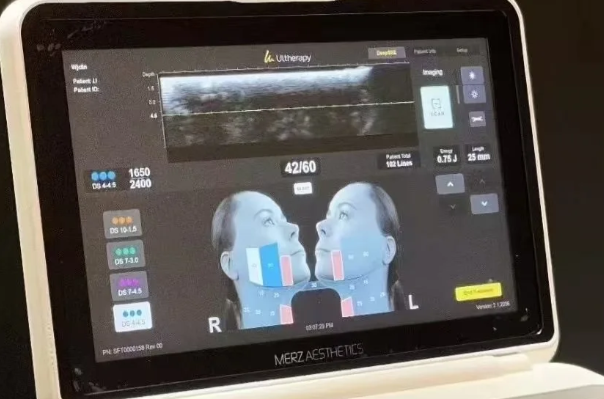
How can we maximize the effectiveness of the Ulthrea?
- Choose a licensed and certified clinic: Make sure that the equipment used is genuine Ulthera; you can request the clinic to provide the device serial number and certification documents.
- Ensure proper hydration before the procedure: Adequate moisture helps with the transmission of ultrasonic energy, so increasing hydration one week prior to the treatment will enhance its effectiveness.
- Post-treatment care: After the treatment, the skin becomes more sensitive. Avoid harsh skincare methods such as exfoliation or steam facial treatments; instead, focus on gentle hydration and nourishment.
- Combined with Collagen supplementation: Taking oral Collagen supplements after the procedure can help accelerate Collagen regeneration and prolong the therapeutic effects.
- Avoid excessive sun exposure: Within 3 months after the procedure, take extra precautions against the sun to prevent ultraviolet rays from accelerating the degradation of collagen and shortening the duration of the treatment effects.
How much does it cost to undergo the Ulthrea treatment in South Korea?
- Full face (including neck): Starting from ¥8 million
- Half of the face (partial treatment): Starting from ¥4.4 million
- Additional fee for using a 4.5-mm deep probe: Some procedures require this additional charge.
Book a legitimate clinic offering HIFU in South Korea through BeautsGO.
If you want to undergo the Ulthrea treatment in South Korea, we strongly recommend booking through the BeautsGO platform to find a regularly certified clinic. This platform connects you with over 849 legitimate medical aesthetics institutions located in Seoul, Busan, Jeju, and other areas. You can directly check the equipment certification, doctors’ qualifications, and user reviews of each clinic. The entire process is provided in Chinese, eliminating any language barriers.
BeautsGO: South Korea’s Medical Aesthetics Platform
正規認證
✅ Over 849 medical institutions offering HIFU treatment | More than 1,457 specialist physicians ✅ Officially re
commended institutions for the American version of the Ulthera HIFU device ✅ Chinese-language reservation servi
ce available, ensuring no language barriers throughout the process
Frequently Asked Questions
Q1: If there is no pain at all after undergoing HIFU, does it mean that the energy used was insufficient?
Not necessarily. The level of pain varies depending on an individual’s nerve sensitivity. The important thing is to ensure that the clinic uses genuine equipment and that the energy settings are within the effective range; it’s not appropriate to judge the intensity of the treatment solely based on the degree of pain experienced.
Q2: How soon after HIFU treatment can one wash their face and apply makeup?
Generally, you can gently wash the area with clean water on the same day after the procedure, and you can resume normal makeup the next day. However, it is recommended to avoid using skincare products containing alcohol or exfoliating ingredients for the first week after the surgery.
Q3: I had an HIFU treatment once. How long should I wait before having another one?
It is generally recommended to wait for at least 12 months after the last treatment to allow the collagen regeneration effects to fully manifest before assessing whether a follow-up treatment is necessary.
Q4: Can HIFU be performed during pregnancy or while breastfeeding?
It is not recommended. During pregnancy or breastfeeding, it is advisable to avoid all medical beauty treatments to ensure the safety of both the fetus and the breastfeeding process.