墨白
墨白 The Ulthrea is currently the only ultrasound treatment globally approved by the US FDA for “non-invasive facial tightening,” and it is extremely popular in South Korea’s medical aesthetics industry. However, many people encounter the same issue when making appointments: clinics offer two packages – 300 sessions or 600 sessions – with prices differing by up to half. What exactly are the differences, and which package is right for me? This article will clearly explain all the distinctions between the 300-session and 600-session Ulthrea packages in 2026.
What is the Ulthrea HIFU?
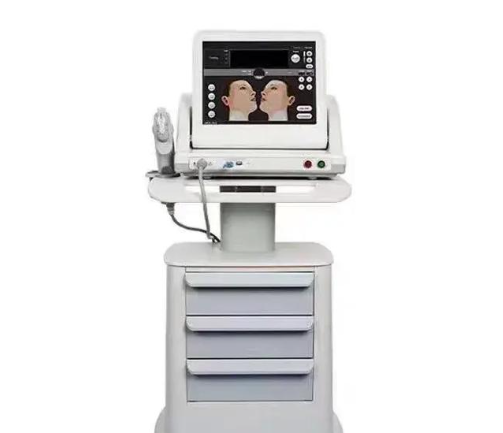
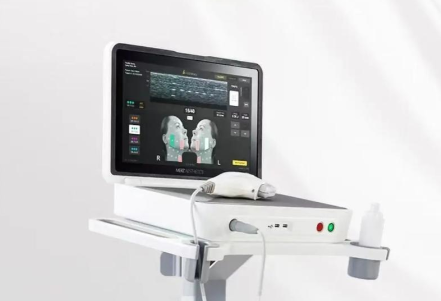
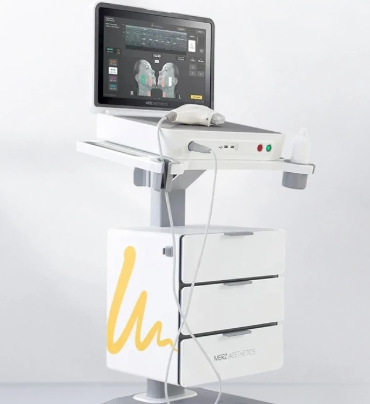
The Ulthrea was developed by the American company Merz. It utilizes MFU-V (micro-focused ultrasound with visualization) technology to precisely target the SMAS fascia layer at a depth of 4.5 mm, the dermis at 3 mm, and the superficial fascia at 1.5 mm. The focused energy, heated to 65–75°C, stimulates the regeneration of Collagen, thereby achieving tightening, lifting, and wrinkle-reducing effects from within the skin. This treatment requires no surgery or downtime.
In Taiwan, it is known as “HIFU”, also referred to as “polar wave HIFU” or “Ulthrea”. The latest version released in 2026 is the Ultherapy PRIME (the second generation of Ulthrea), which features a more precise image-guided system, resulting in improved treatment accuracy and comfort.
What does “hair density” mean?
The “number of pulses” referred to by HIFU means the number of times the device emits focused ultrasonic energy during each treatment session. Each pulse represents an energy spot that creates tiny thermal coagulation points at different depths within the skin, thereby stimulating collagen production. The more pulses there are, the larger the treated area and the more even the energy distribution will be; theoretically, this results in more pronounced lifting effects.
However, it is important to note that the number of shots does not necessarily equate to the quality of the results; the key to determining the effectiveness lies in the mapping design. 500 precise shots may be more effective than 800 random shots.
300 shots vs 600 shots: A comprehensive comparison of the key differences
| Comparative projects | 300 instances | 600 instances |
|---|---|---|
| Scope of treatment coverage | Specific key areas, such as the chin line, brow arch, and Nasolabial Fold Correction area | Full face coverage (including the Forehead, cheeks, jawline, and neck) |
| Suitable for various face shapes | The contour definition is decent, though there is some localized sagging. | The overall body feels loose, and multiple areas require tightening. |
| Suitable for all ages | Ages 28 to 38: mild signs of aging | Aged 35 to 55, with moderate to severe skin laxity |
| Duration of effect | Approximately 6 to 12 months | Around 12 to 18 months |
| Degree of pain | Moderate (varies depending on individual perception) | Higher (bigger scope and longer duration) |
| Duration of the treatment | Approximately 30 to 45 minutes | Approximately 60 to 90 minutes |
| Reference for costs in South Korea | Starting from 9.95 million Korean won | Starting from 15 million Korean won |
Who is the 300 treatment suitable for?
The 300-unit Ulthrea is primarily designed to address localized facial sagging and is suitable for the following situations:
- ✅ The contours are still clearly defined, although there is some localized sagging (such as the lines around the chin and the drooping ends of the eyebrows).
- ✅ For those who are younger (28–38 years old) and still have some skin elasticity, only local reinforcement is needed.
- ✅ This is my first time using the Ulthrea; I want to understand my sensitivity and tolerance to this form of energy treatment.
- ✅ With a limited budget, I would like to focus on key areas first to achieve better results.
- ✅ Can be used in combination with other anti-aging treatments (such as Thermage) as a supplementary measure; there is no need to cover the entire face.
Who is the 600 Fit suitable for?
600 units provide full-face coverage, making it ideal for those who need overall facial tightening.
- ✅ For those over 35 years old, the face begins to show signs of sagging and relaxation.
- ✅ Multiple issues such as Nasolabial Fold Correction, fine lines around the eyes, and Double Chin exist simultaneously
- ✅ If you have a larger face or more facial fat, it takes more effort to reach the fascia layer.
- ✅ Seek significant and long-lasting Lifting effects (lasting for more than 12 months)
- ✅ I had undergone 300 treatments before, but the results weren’t very noticeable. I want to upgrade the intensity of my treatment.
Is it true that the more hair implants one gets, the better?
This is a common misunderstanding among many people. The effectiveness of the Ulthrea depends on three key factors:
- 🎯 Mapping Design: Doctors need to create precise treatment plans based on the anatomical structure of your face, ensuring that they avoid areas with nerve and blood vessel distributions.
- ⚡ Advanced energy setting: Three different depths are available – 1.5mm (surface layer), 3mm (dermis), and 4.5mm (fascia layer) – which should be used in combination according to the specific treatment needs.
- 🔬 Treatment Intensity: Focused injections are administered in key areas where relaxation is desired, rather than a uniform distribution across the entire face.
In other words, the industry-recognized standard of 600 treatments per face is determined by the minimum amount of energy required to cover the entire face, and it doesn’t mean that more treatments are necessarily better. The “enhanced version” treatment involving over 800 sessions is only meaningful when there is a clinical need for it.
Reference for the costs of Ulthrea in South Korea in 2026
The cost of the Ulthrea in South Korea varies depending on the type of clinic, the qualifications of the physician, and the specific treatment plan chosen.
| Type | 300 instances | 600 instances | Note |
|---|---|---|---|
| Assembly-line Dermatology | Starting from ₩700,000 to 12 million Korean won | Starting from 13 million to 2 million Korean won. | The prices are transparent, but the payment methods may be somewhat standardized. |
| One-on-one premium Dermatology services | Starting from 10 million to 1.8 million Korean won | Starting from 1.8 million to 3.5 million Korean won | The dean personally designed and arranged the layout, ensuring even more precise results. |
| Ultherapy PRIME (Second Generation) | Starting from 12 million to 2 million Korean won. | Starting from ₩2 million to ₄ million Korean won | The latest version features more accurate image guidance. |

Fisrain Plastic Surgery Hospital
BeautsGO 認證
📍 Seoul
🕐 Monday to Thursday: 09:30 – 19:00
Friday: 09:30 – 21:00
Saturday: 09:30 – 17:00
Sunday: Closed
| Recommended Projects | Reference price |
|---|---|
| Popular treatments | Please visit BeautsGO for more information. |
* The prices are for reference only; the actual charges will be based on the clinic’s current rates on the day of service.
BeautsGO’s Guide to Booking Ulthrea Treatments in South Korea
If you want to safely schedule an Ulthrea treatment in South Korea, BeautsGO is the most recommended option. The platform lists multiple certified Ultherapy clinics in Seoul, with transparent pricing and no hidden fees. Chinese-speaking customer service is also available to assist you in confirming the treatment plan and the qualifications of the doctors.
When making an appointment, it is recommended to confirm with the clinic the following: 1) whether the equipment used is an officially certified Ultherapy device from Merz (the genuine product, not a replica); 2) whether the practitioner performing the treatment is the clinic’s director in person; 3) whether pre-treatment ultrasound scans are provided to confirm the precise placement of the treatment points. These three factors are crucial indicators of the quality of a clinic.
Frequently Asked Questions
Q1: Which is more painful, the 300-shot or 600-shot version of the Ulthrea?
A: The treatment scope of the 600-shot option is wider and the treatment duration is longer, resulting in relatively greater discomfort overall. However, modern clinics usually provide pre-operative painkillers or local anesthesia, which can significantly reduce the pain. The 300-shot treatment course is shorter (30–45 minutes), making it more tolerable.
Q2: How often should the Ulthrea be used?
A: It is generally recommended to receive the treatment every 12 to 18 months. The effects usually become apparent 1 to 3 months after the procedure, and the period during which Collagen continues to proliferate is approximately 6 months. Frequent treatments are not advised, as excessive therapy may actually damage the subcutaneous tissue.
Q3: Does the Ulthrea have any downtime during its operation?
A: There is no significant downtime. On the day of the procedure, the face may experience mild redness or temporary swelling, but these symptoms usually subside by the next day. Some people may feel a slight tingling sensation in the deeper layers of the skin within 1 to 2 weeks after the procedure; this is a normal reaction associated with the regeneration of Collagen.
Q4: If 300 doses were administered in Q4 and there was no effect, is it necessary to receive additional doses?
A: The effects usually become fully apparent 2 to 3 months after the procedure. It is recommended to wait until 3 months have passed before evaluating the results. If you don’t notice any significant changes, the possible reasons could be: ① The design of the microneedling pattern is not precise enough; ② The number of needles used is insufficient to cover the entire area of your face; ③ Your body’s natural ability to regenerate Collagen is relatively weak. It is advisable to consult a doctor before deciding whether additional treatments are needed or whether increasing the number of needles to 600 would be more appropriate.
Q5: Which is better, the Korean version of the Ulthrea or the American version?
A: The Ulthrea version of the HIFU device has received FDA approval. Its energy can precisely penetrate the SMAS fascia layer (up to 4.5 mm), resulting in more significant and long-lasting lifting effects. However, the cost is also much higher (usually 3 to 5 times that of the Korean version). The Korean version of the HIFU device uses milder energy and is more affordable, making it suitable for basic maintenance treatments. Those with a clear need for anti-aging treatments are advised to opt for the Ulthrea version first.